Introduction
Facial recognition technology, once seen only in science fiction films, is now an integral part of our daily lives. But what exactly is facial biometrics, and why is it considered a kind of digital signature? Let's explore how this technology works, its practical applications, and its impact on our daily lives.
What Is Facial Biometrics?
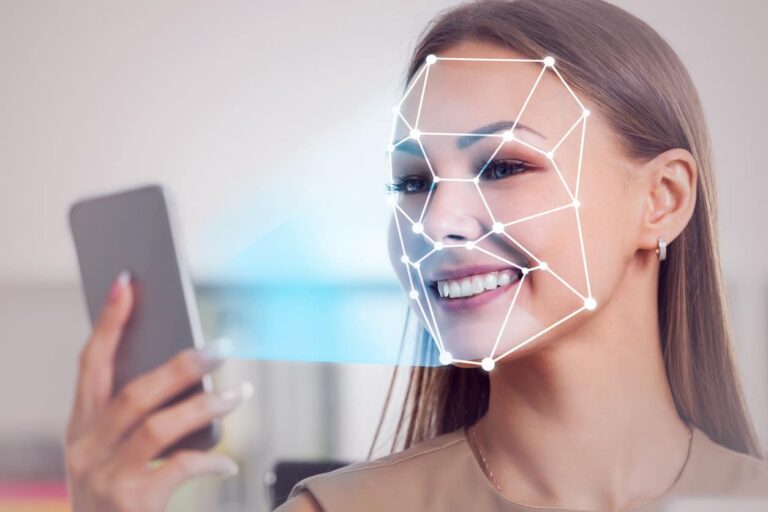
Facial biometrics is a technology that analyzes facial features to identify or verify a person's identity. Using complex algorithms, cameras capture unique details of the face, such as the distance between the eyes, the shape of the nose, and the jawline contour. These data are then converted into a digital pattern that can be compared with a database.
How Does It Work?
The facial recognition process generally involves three main stages:
- Image Capture: A camera captures the image of a person's face.
- Feature Extraction: Algorithms identify unique facial features.
- Comparison and Identification: The extracted digital pattern is compared with a database to verify identity.
With the evolution of artificial intelligence and machine learning, the accuracy and efficiency of this technology have significantly increased.
Practical Applications of Facial Biometrics
Facial biometrics is present in various areas and plays a crucial role in different sectors. Here are some practical applications:
Security and Surveillance
- Airports: Facial recognition is used to verify passengers' identities quickly and securely.
- Public Spaces: Intelligent surveillance cameras monitor large crowds, helping to identify potential suspects.
Electronic Devices
- Smartphones: Unlocking phones using facial recognition is a convenience many have already adopted.
- Computers and Tablets: Facial authentication for secure access without the need for passwords.
Banking and Financial Services
- Identity Verification: Banks use the technology to ensure the security of online transactions.
- Account Opening: Customers can create bank accounts by verifying their identity through a simple selfie.
Marketing and Retail
- Consumer Analysis: Stores use cameras to study customer behavior and optimize the shopping experience.
- Personalized Advertising: Ads can be tailored based on facial recognition, offering relevant content to the target audience.
Advantages and Disadvantages
Advantages
- Enhanced Security: Reduces the risk of fraud and increases the security of transactions.
- Convenience: Eliminates the need to remember passwords or carry cards.
- Efficiency: Automated and fast processes without human intervention.
Disadvantages
- Privacy Issues: Facial data collection may raise concerns about surveillance and consent.
- Identification Errors: The technology still faces challenges in low-light environments or unfavorable angles.
- Costs: Implementation and maintenance can be expensive for some organizations.
The Future of Facial Biometrics
Facial biometrics is constantly evolving and promises to integrate even more into our lives. It is expected that:
- Integration with Other Technologies: Such as IoT (Internet of Things) and augmented reality.
- Accuracy Improvements: Reduction of errors through more advanced algorithms.
- Regulatory Adaptation: Development of laws that protect users' privacy.
Conclusion
Facial biometrics, while a powerful and convenient tool, requires a careful approach to balance innovation and privacy. As this technology continues to develop and integrate into our daily lives, it is essential that we stay informed and prepared for its implications.
Are you ready to embrace this technology? Explore more about how facial biometrics can impact your daily life and stay tuned for the updates to come. If you enjoyed this article, share it with your friends and keep following our blog for more interesting content!
Share Text: